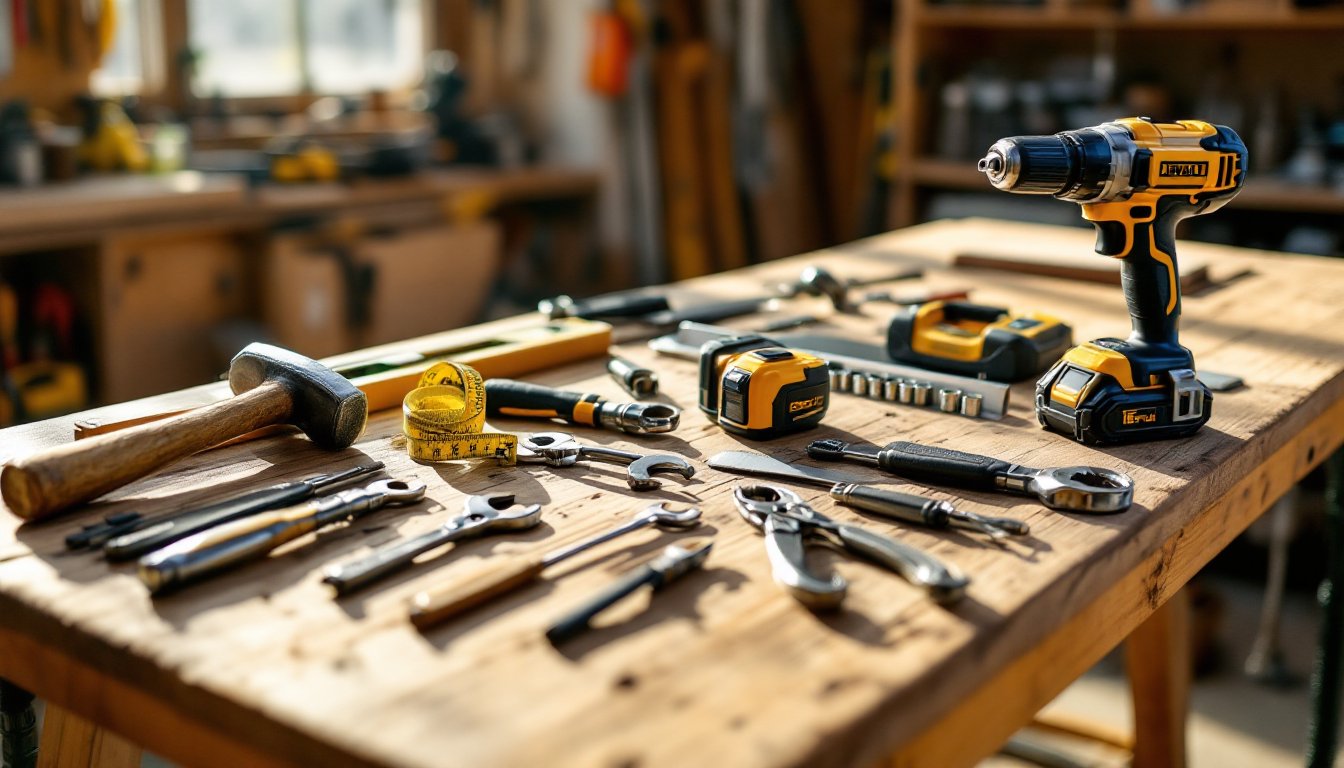
Hand riveting tools are the overlooked workhorses of the DIY workshop. Whether you’re repairing metal gutters, securing aircraft aluminum on a restoration project, or fastening sheet metal in a custom build, the right riveting tool transforms a frustrating fastening problem into a clean, permanent solution. Unlike bolts or screws, rivets create a seamless joint that won’t loosen under vibration or stress, a huge advantage in automotive and metalworking projects. This guide cuts through the noise and shows you exactly which hand riveting tools exist, how they work, and which one belongs in your garage.
Table of Contents
ToggleKey Takeaways
- Hand riveting tools create permanent, vibration-resistant fastening joints that won’t loosen, making them ideal for automotive, aviation, and metalworking projects where bolts and screws fall short.
- Pop rivet tools are the most practical hand riveting tool for homeowners, costing $15–$40, requiring only single-side access, and handling 99% of household repairs without electricity or special setup.
- Traditional hand riveting with a rivet set and bucking bar produces stronger joints through impact deformation but requires two people and significant skill, making it better suited for high-stress structural work than DIY projects.
- Match your hand riveting tool size to your rivet diameter (typically 1/8-inch or 3/16-inch), respect the tool’s grip range, and always test on scrap material first, as rivet installation is a learned skill.
- Unlike bolts and screws, rivets are permanent fasteners that won’t rattle loose or over-tighten, but they cannot be removed without drilling, so careful alignment and measurement are essential before installation.
What Are Hand Riveting Tools and Why They Matter
A rivet is a permanent fastener: a short metal pin with a head on one end. You insert it through aligned holes in two or more pieces of material, then deform the tail to create a second head that locks the joint tight. Hand riveting tools do the deforming, no electricity needed.
Why choose rivets? They’re lighter than bolts (crucial in aviation and automotive), they don’t create the stress concentrations that bolt holes do, and they’re faster to install once you develop the rhythm. They’re also ideal for materials like aluminum that can gall or seize when you use threaded fasteners. On a practical level, riveted joints don’t rattle loose like screws, and you can’t accidentally over-tighten and crack the surrounding material like you might with a wrench.
But, rivets are permanent. You can’t remove them without drilling them out, so measure twice. They also require access to both sides of the material (you need to hold the rivet set or bucking bar on the back while you strike the head), which limits where you can use them. For most home and workshop projects, metal stairs, custom shelving brackets, trailer repairs, metal art, and tool modifications, hand rivets are a no-fuss answer that lasts decades.
Types of Hand Riveting Tools for Home Projects
Pop Rivet Tools and Squeeze Rivets
The pop rivet tool (or rivet gun) is the most common hand riveting tool you’ll encounter. It’s spring-loaded, handheld, and operates purely by hand squeezing. You insert a pop rivet, a hollow aluminum or steel rivet with a mandrel (a thin stem) threaded through its center, into the tool’s nose. Align the tool with your hole, squeeze the trigger or handles, and the mandrel pulls the rivet shank into the hole, expanding the rivet’s head on the blind side (the side you can’t reach). When enough pressure builds up, the mandrel snaps off with a satisfying click, leaving a solid fastener behind.
Pop rivets are brilliant for situations where you can’t access the back of the material, hanging drywall, patching aluminum siding, or securing trim. Styles range from manual squeeze (lever-action) to semi-automatic (they advance a new rivet into position after each shot) to pneumatic (air-powered, faster but overkill for DIY). For home projects, a quality manual squeeze rivet tool costs $15–$40 and handles rivets from 1/8-inch to 3/16-inch diameter, plenty for 99% of household repairs.
Manufacturers and stores often stock rivet assortments with aluminum rivets (light-duty, for trim and non-load-bearing work) and steel rivets (stronger, for thicker material or vibration-prone joints). Always match the rivet diameter to your tool’s nose, mismatched sizes jam or deform poorly.
Traditional Hand Riveting Hammers
The old-school approach uses two tools: a rivet set (a steel punch with a cup-shaped tip that matches the rivet head) and a bucking bar (a heavy steel block). Insert the solid rivet through your holes, position the bucking bar on the back, place the rivet set on the front head, and strike the rivet set with a hammer. The impact spreads the rivet tail on the blind side while the bucking bar supports it. This method requires two people or excellent grip strength, skill, and a steady hand, one wrong hammer swing can bend the rivet or dent your material.
Traditional riveting is slower and more physically demanding than pop riveting, but it produces a stronger, more permanent joint because the rivet is upset (deformed) under impact rather than pulled. It’s the method used in aircraft and heavy structural work. For home projects, this is overkill unless you’re restoring vintage equipment or doing high-stress metalwork. But, if you inherit a rivet set or enjoy traditional metalworking, a 2-pound ball-peen hammer, a set of rivet sets (usually sold as a kit for $20–$50), and a bucking bar will last forever and produce professional results.
Selecting the Right Riveting Tool for Your Needs
Start by asking: What material am I fastening, and can I reach both sides? If you’re working blind (one side inaccessible), a pop rivet tool is your only option. If both sides are accessible and you need maximum strength, consider traditional hand riveting.
Next, check your rivet size. Most home improvement stores stock 1/8-inch and 3/16-inch pop rivets: 1/4-inch is less common but available. Pop rivet tools are usually sized for a specific diameter, a “3/32-inch tool” works best with that size, though some adjustable models handle a range. Confirm your tool’s capacity before buying rivets.
For material thickness, aluminum pop rivets work up to about 3/16-inch of soft material per rivet. Thicker or harder materials need steel pop rivets or, better yet, traditional hand riveting. The rivet’s grip range (the thickness it can fasten) is stamped on the tool or the box, respect it. A rivet that grips only 1/16 to 1/8-inch won’t create a proper joint if you’re fastening 1/4-inch plate.
Consider application frequency. If you’re riveting once or twice a year, a manual pop rivet tool is ideal, no maintenance, no batteries. If you’re doing a large project (installing 50+ rivets), a semi-automatic model saves time and hand fatigue. Pneumatic tools are for professionals or high-volume builders.
Don’t overlook ease of use. Cheap pop rivet tools jam frequently and develop weak springs. Mid-range tools (brands stocked at major home centers for $25–$60) offer better leverage and reliability. Read reviews focused on durability, not just lowest price.
Finally, practice on scrap material. Your first rivets will look rough, that’s normal. Rivet installation is a learned skill. You’ll quickly develop feel for the correct tool angle, pressure, and material alignment. Many DIYers watch tutorial videos on Instructables or Popular Mechanics’ tool reviews to see live demonstrations before starting. That 10 minutes of viewing saves you frustration and wasted rivets.
Conclusion
Hand riveting tools deserve a spot in every DIY workshop. They’re affordable, durable, and solve fastening problems that bolts and screws can’t touch. Pop rivet tools are the practical starting point for homeowners: they’re fast, accessible, and require no special setup. Traditional hand riveting and bucking offer unmatched strength if your project demands it. Start with quality over price, practice on scrap, and you’ll be producing clean, permanent joints for years to come.