Hand stripping is one of the most effective ways to maintain a dog’s coat, especially for breeds with wiry or double coats like terriers, schnauzers, and wire-haired retrievers. Unlike clipping, which flattens the coat, hand stripping removes the undercoat and dead guard hairs by hand or with specialized tools, leaving the coat healthier, shinier, and more resilient to dirt and water. If you’ve noticed your dog’s groomer using unfamiliar tools or heard fellow dog owners mention hand stripping, you’re probably wondering what the fuss is about, and whether it’s something you can tackle at home. The right tools make all the difference between a frustrating experience and a grooming session that actually works. This guide walks you through the essential hand stripping tools, how to pick the right ones for your dog’s coat type, and beginner-friendly techniques to get started.
Table of Contents
ToggleKey Takeaways
- Hand stripping tools, particularly stripping knives with fine to coarse teeth, remove dead hair from the root and preserve coat texture better than clipping, leaving dogs’ coats healthier, shinier, and more resilient.
- Select your stripping knife based on coat type: fine-toothed for delicate areas and soft coats, medium-toothed for body work, and coarse-toothed for thick wiry coats, with prices ranging from $15–$30 for reliable home use.
- Finger cots provide essential grip and friction for effective hand stripping, reducing hand fatigue and preventing knife slippage during grooming sessions.
- Proper preparation—bathing, thorough drying, and starting on inconspicuous areas—is critical; work in organized body sections with gentle plucking motions rather than yanking to avoid irritating your dog’s skin.
- Hand stripping is most effective during natural shedding seasons (spring and fall) when dead hair releases easily, and initial DIY sessions typically take 1–2 hours compared to a professional’s 2–3 hours.
What Is Hand Stripping and Why Dogs Need It
Hand stripping is a grooming method where dead hair is removed from the root rather than cut. Most dog owners are familiar with clipping, using clippers to cut hair short, but that approach leaves the hair follicle intact and the undercoat behind, which can trap moisture, dirt, and oils against the skin. Over time, this leads to matting, skin irritation, and a dull coat.
Certain breeds were developed with coats designed to shed naturally, cycling through growth and rest phases. Hand stripping mimics this natural shedding process by pulling out hairs at the end of their growth cycle. The result is a coat that looks fuller, feels softer, and genuinely sheds less because you’re removing the hair before it falls out on your furniture.
Breeds that benefit most from hand stripping include wire-haired terriers, schnauzers, spaniels with double coats, and some retrievers. Clipped coats often become soft and dense over time, almost cottony, which is fine for pets but not ideal if you’re showing your dog or want authentic breed appearance. Hand stripping preserves the coat’s natural texture and color intensity. It’s also gentler on the skin because you’re not running powered blades repeatedly over sensitive areas. That said, hand stripping takes patience, skill, and the right tools.
Essential Hand Stripping Tools Every Dog Groomer Should Own
Stripping Knives and Their Uses
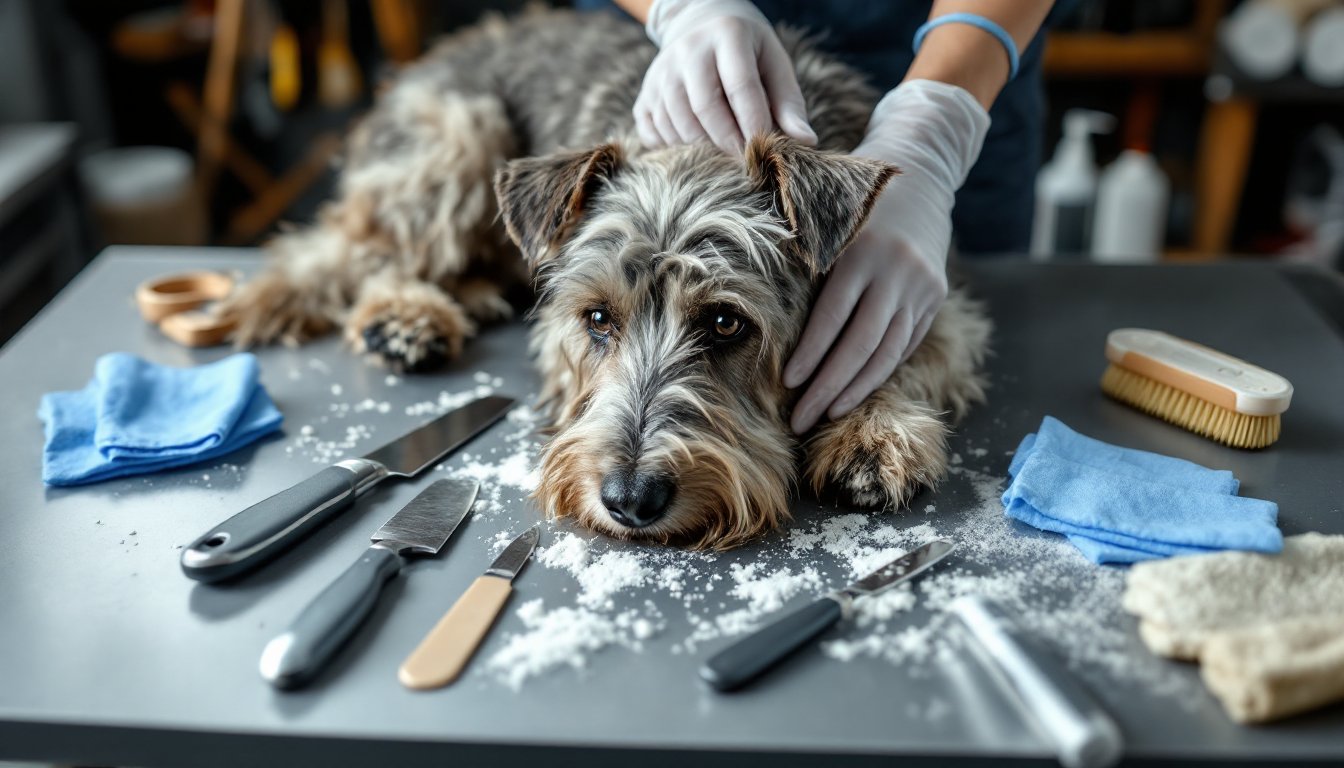
Stripping knives are the backbone of hand stripping. Unlike kitchen knives, a stripping knife has a short, blunt blade (usually 1–2 inches long) with fine, closely-spaced teeth. The blade doesn’t cut: instead, it grips and pulls dead hair out by the root. You’ll find three main types:
- Fine-toothed knives for delicate areas like the face, ears, and around the eyes. These teeth are closer together and gentler on sensitive skin.
- Medium-toothed knives for the body and legs. They strike a balance between grip and speed, making them the workhorse tool for most DIY groomers.
- Coarse-toothed knives for thick, wiry coats or heavy shedding phases. These remove hair faster but require more pressure and can irritate if used on thin skin.
When shopping, look for stainless steel construction, it won’t rust or corrode, and it’s easier to clean and sanitize. A good knife feels balanced in your hand, not too heavy. Brands like Artero, Safari, and Andis make solid mid-range options: they’re widely available at grooming supply shops and online retailers. Don’t assume expensive equals better, a $15–$30 stripping knife does the job just as well as a $50 one for home use. What matters more is finding the tooth pattern that matches your dog’s coat type.
Finger Cots and Grip Aids
Finger cots are small rubber or latex sleeves that slip over your thumb and fingers. They provide friction and grip, preventing the knife from slipping and reducing hand fatigue during long grooming sessions. Without them, you’re gripping bare metal and relying entirely on hand strength, your fingers get sore, and your technique suffers.
Look for finger cots made from nitrile or latex (about $5–$10 for a pack). They’re disposable, so you can replace them as they wear. Some groomers reuse them for a week or two if they’re still in good shape. A few alternative grip aids worth knowing about:
- Grooming gloves with rubber dimples on the palms. These cover your whole hand and are great if you have arthritis or sensitive hands, but they’re bulkier than finger cots.
- Rosin powder or grip wax, sprinkled on your fingers for extra traction. Old-school and effective, though messier than cots.
- Thumb loops and hand straps that let you anchor the knife while you grip the dog’s skin. Useful once you’re comfortable with the technique.
Start with basic finger cots and a mid-range stripping knife. As you get more confident, you can experiment with different knife styles and grip techniques to find what feels natural.
How to Choose the Right Tools for Your Dog’s Coat Type
Your dog’s coat type dictates which stripping knife and technique will work best. Understanding this upfront saves frustration and protects your dog’s skin.
Double-coated breeds (German Shepherds, Golden Retrievers, Corgis) have a soft undercoat beneath a coarser outer coat. These dogs shed heavily and benefit from stripping, but the undercoat can be dense. Use a medium-toothed knife and expect the job to take longer, you’re removing a lot of hair. Start with the undercoat, then work on the guard hairs. Wiry, single-coated breeds (Schnauzers, most terriers) have coats that feel crispy or bristly. A fine- to medium-toothed knife works well here: the coat is naturally less dense, so you’ll work faster and see quicker results.
Soft or silky coats (Spaniels, some setters) need gentleness. Use a fine-toothed knife and lighter pressure: you’re removing dead hair, not gouging the skin. These coats mat easily if undercoat isn’t removed regularly, so you may need to strip more frequently (every 6–8 weeks) rather than working harder each time.
Before committing to hand stripping, feel your dog’s coat. Grab a small section near the ear or on the leg and pull gently. Dead hair comes out easily: live hair resists. If nothing comes out, your dog isn’t in a shedding cycle yet, and stripping won’t be efficient. The best time to strip is during natural shedding seasons (spring and fall for most breeds), when dead hair is ready to go.
If you’re unsure about your dog’s coat, research the breed standard or consult a groomer who hand-strips. It’s worth learning the details, showing up with a coarse-toothed knife on a Spaniel’s delicate coat wastes effort and risks irritating sensitive skin.
DIY Hand Stripping Techniques for Beginners
Before you start, prepare your workspace. Lay down newspaper or a grooming pad, loose hair gets everywhere. Have your dog on a sturdy table or grooming stand, not the floor. A stand keeps your dog calm (they’re less likely to wander) and your back straight.
Step 1: Bathe and dry your dog. Hand stripping works best on clean, fully dry hair. Wet hair is slippery and harder to grip: you’ll pull skin instead of hair. Blow-dry thoroughly, especially on double-coated breeds where the undercoat holds moisture.
Step 2: Start with small, inconspicuous areas. Don’t jump straight to the face or leg. Practice on the rear end or shoulder where mistakes are less visible. Gather a small pinch of hair between your thumb and the flat of the knife blade (not the edge). The knife sits flat against the skin: you’re using it as a backstop, not slicing.
Step 3: Use a gentle plucking motion. Flick your wrist upward and slightly back, as though brushing the hair away. You’re not yanking or twisting, that hurts and irritates skin. Dead hair comes out with light pressure: live hair resists. If you’re fighting it, you’re either using too much force or your dog isn’t in a shedding phase.
Step 4: Work in sections. Divide your dog’s body into zones: head, neck, chest, front legs, back, rear legs, rear end, tail. Strip one area completely before moving on. This keeps you organized and prevents you from overdoing any single spot.
Step 5: Pay attention to your dog’s comfort. Hand stripping shouldn’t hurt. If your dog yelps, flinches, or keeps moving away, stop. You may be pressing too hard, working on live hair, or your dog’s skin is sensitive. Take breaks every 15 minutes, especially with puppies or anxious dogs.
Safety and comfort notes: Wear nitrile gloves to keep your hands clean and improve grip. Remove your dog’s collar to avoid catching hair. Check in on sensitive areas like the belly, inner legs, and ears, these skin zones are thinner and more prone to irritation. Most DIY jobs take 1–2 hours, depending on your dog’s coat size and your experience. Your groomer can finish a dog in 2–3 hours because they do this all day: don’t be surprised if your first attempt takes longer.
If your dog has matted areas, never try to strip a mat, it’s painful and ineffective. Either clip out the mat or use a dematting spray and comb first. And remember: if your dog has skin conditions, allergies, or sensitive areas, consult your vet before starting. Hand stripping isn’t suitable for every dog, and pros like those at Today’s Homeowner or This Old House often recommend getting a professional opinion first.
Conclusion
Hand stripping is a learnable skill that pays off in a healthier, better-looking coat. Start with a quality stripping knife suited to your dog’s coat type and a pack of finger cots. Practice on small areas during your dog’s shedding season, stay patient, and don’t force it. Your dog’s comfort and your technique matter more than speed. With a few grooming sessions under your belt, you’ll develop the feel for the work and may find it’s a rewarding way to bond with your dog while keeping their coat in top shape.