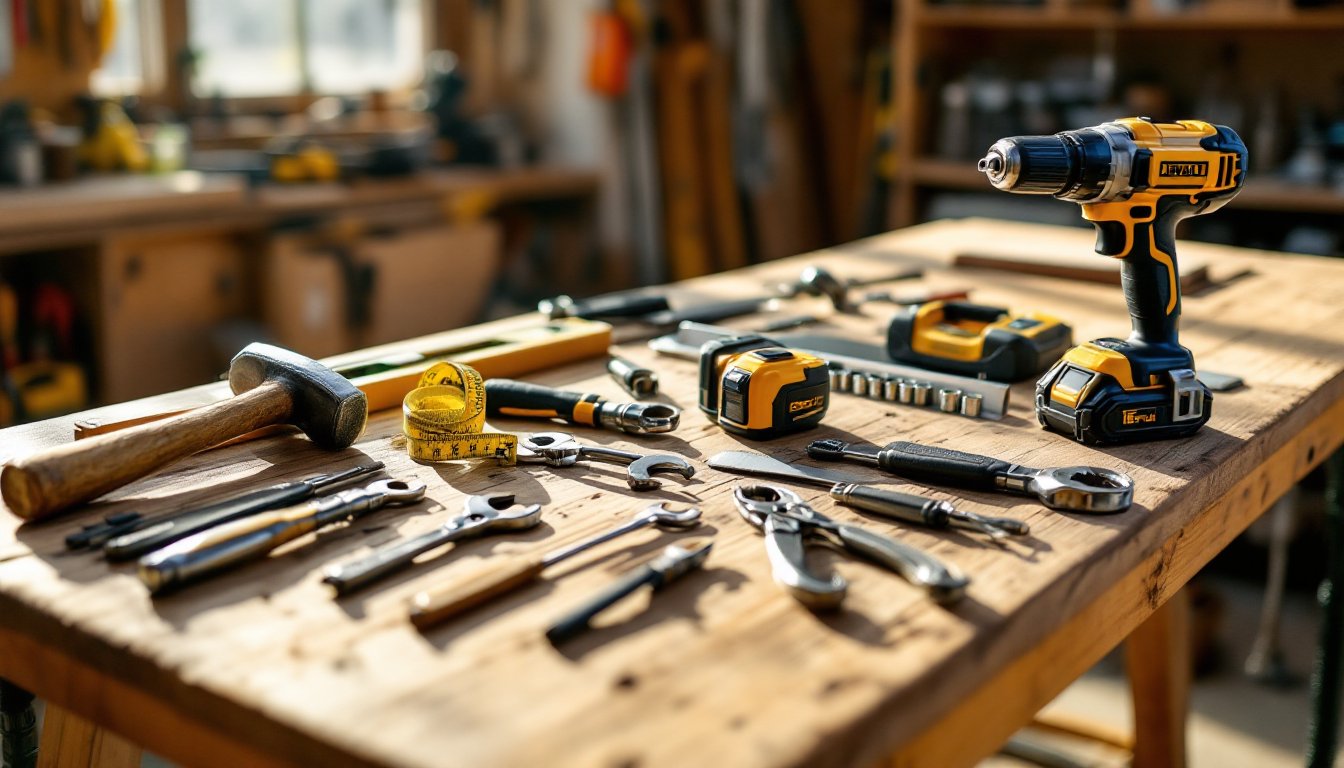
When you’re standing in your garage or workshop, ready to tackle a project, what’s in your hand? For millions of homeowners and DIY enthusiasts, it’s a Kobalt tool. Kobalt hand tools have earned their place in American workshops by delivering solid performance without the premium price tag of specialty brands. Whether you’re hanging drywall, assembling furniture, or making quick repairs around the house, Kobalt offers a reliable range of tools that get the job done. In 2026, as home improvement remains a priority for countless families, understanding what makes Kobalt stand out, and which tools deserve a spot in your collection, can save you money and frustration on your next project.
Table of Contents
ToggleKey Takeaways
- Kobalt hand tools offer a balanced combination of durability, ergonomic design, and fair pricing, making them ideal for homeowners without premium brand costs.
- Most Kobalt tools come with a lifetime warranty against manufacturer defects, providing peace of mind and long-term value compared to budget alternatives.
- A smart DIY starter kit should include essentials like a claw hammer, multi-bit screwdriver, slip-joint pliers, adjustable wrench, tape measure, and torpedo level—covering 90% of household tasks for $80-$120.
- Kobalt hand tools use forged steel and hardened alloys that resist bending, dulling, and stripping, delivering practical performance benefits that show up in every project.
- Building your collection incrementally as projects demand—rather than buying massive sets—keeps your workspace organized and ensures you know how to use each tool effectively.
- Proper storage in a dry location and regular maintenance significantly extend tool lifespan, making Kobalt tools a genuinely useful investment for long-term home improvement work.
Why Kobalt Hand Tools Stand Out for Home Improvement Projects
Kobalt, sold primarily through Lowe’s, has built its reputation on a simple formula: dependable tools at fair prices. The brand doesn’t chase flashy marketing or limited-edition finishes: instead, it focuses on what actually matters to homeowners, ergonomics, durability, and value.
One key reason Kobalt tools stand out is their warranty structure. Most Kobalt hand tools come with a lifetime warranty against manufacturer defects, which means if the handle cracks, the head breaks, or the ratchet jams, you can replace it at no cost. That peace of mind alone sets Kobalt apart from bargain-basement options where you’re essentially buying disposable tools. In the context of real DIY work, where a tool might sit unused for months then suddenly be needed urgently, that warranty is worth its weight.
Another advantage is the balance between weight and durability. Kobalt tools use forged steel and hardened alloys that resist bending, dulling, or stripping, common failures in cheap tools. A Kobalt screwdriver holds its tips sharper longer: a Kobalt wrench won’t round off fasteners as easily. These aren’t frills: they’re practical benefits that show up in every project.
The construction hand tools category has evolved, and Kobalt has kept pace by offering modern ergonomic grips and balanced designs that reduce hand fatigue during longer sessions. If you’re climbing a ladder or crouching under a sink, a comfortable grip isn’t luxury, it’s necessity.
Essential Kobalt Hand Tools Every Homeowner Should Own
Building a solid hand tool collection doesn’t mean buying every tool at once. Smart homeowners start with the essentials and add as projects demand. Here’s what belongs in every basic DIY kit.
Hammers, Screwdrivers, and Pliers
A 16-ounce claw hammer is non-negotiable. Kobalt’s hammers feature shock-absorbing handles that reduce wrist strain, a real benefit if you’re driving more than a handful of nails. The claw should be well-hardened and slightly curved for easy nail extraction without damaging surrounding wood.
Screwdrivers come in two styles: Phillips (the cross-shaped head) and flathead (the straight slot). Most jobs require both. Kobalt offers multi-bit screwdrivers where one handle holds multiple tips, saving space and money. Resist the urge to use a flathead screwdriver as a chisel or pry bar: that’s how handles split and bits strip. A proper 4-in-1 screwdriver, combining Phillips and flathead in two sizes, covers 80% of typical household fastening.
Pliers are your grip-and-twist specialists. A basic set includes slip-joint pliers (adjustable-width jaws for various fastener sizes), needle-nose pliers (precision work in tight spaces), and arc-joint pliers (sometimes called tongue-and-groove, excellent grip strength). Kobalt pliers maintain edge sharpness and won’t develop wobbly joints after moderate use.
Wrenches, Sockets, and Precision Tools
Wrenches come in SAE (Imperial) and Metric sizes: know which your project needs before buying. A basic adjustable wrench (crescent wrench) handles multiple bolt sizes in a pinch, though fixed wrenches grip more securely and won’t slip as easily. Kobalt’s adjustable wrenches have smooth-turning screws and tight tolerances that prevent the head from moving during use.
Socket sets are invaluable for projects involving bolts and fasteners. A 3/8-inch drive set covers most household needs without being too heavy: 1/4-inch is lighter but has lower torque capacity, and 1/2-inch is overkill for home projects. Kobalt socket sets typically include a ratchet, extension bars, and a storage case, making them a practical investment.
Precision tools matter when accuracy counts. A torpedo level (adjustable length, built-in spirit bubble) shows whether surfaces are truly level or plumb, critical for shelving, picture frames, or cabinet installation. A tape measure in the 25-foot length covers most interior work: 16-foot is cramped for larger spaces, and 35-foot is excessive for homes. Kobalt tape measures have easy-to-read markings and lock mechanisms that hold the blade extended without slipping.
A claw bar (also called a cat’s paw or pry bar) deserves its own spot for demolition, trim removal, and getting into tight spots where a hammer claw won’t fit. The flat end should be sharp enough to slip behind trim but not so sharp it will break. Consider that common hand tools are often overlooked until you need them urgently, making quality versions worth the extra dollars.
Quality, Warranty, and Value Comparison
How does Kobalt stack against other mid-range and premium brands? The honest answer is that Kobalt occupies a sweet spot where quality and price align well.
Compared to ultra-budget brands (often found at dollar stores or imported under generic labels), Kobalt tools will outlast cheaper alternatives by years. A $3 screwdriver that strips after five uses costs more than a $12 Kobalt screwdriver that works for a decade. Compared to premium brands like Snap-on or Wera, Kobalt trades some specialty features and ultra-light weight for affordability. A professional mechanic might prefer Snap-on’s precision, but a homeowner rarely needs those marginal gains.
The lifetime warranty is where Kobalt really shines. Unlike some competitors that offer limited warranties (2-5 years) or “workmanship warranties” that exclude wear and tear, Kobalt’s coverage is straightforward. Drop your hammer and the handle splinters? They’ll replace it. The ratchet stops holding? Lifetime coverage. This matters because home tools get stored, forgotten, then found years later in attics or basements. You want a tool that’ll still perform when you rediscover it.
Price-wise, according to Popular Mechanics’ review of Kobalt tools at Lowe’s, the brand consistently delivers solid performance without premium markups. Individual tool prices range from $5-$80 depending on complexity, and complete sets (hammer, screwdriver, wrench sets) typically cost 15-25% less than equivalent name-brand options.
One caveat: Kobalt doesn’t make every specialty tool. If you’re into fine woodworking, you might prefer traditional chisels or hand planes from companies focused on that craft. But for general household repairs, projects, and DIY assembly, Kobalt coverage is comprehensive.
Getting Started With Your Kobalt Hand Tool Collection
Don’t fall into the trap of buying a massive “100-piece set” where half the tools are redundant or rarely used. A smarter approach is building incrementally.
Start with the core set: One claw hammer, one multi-bit screwdriver, a slip-joint plier, needle-nose pliers, one adjustable wrench, a 16-foot tape measure, and a torpedo level. This covers roughly 90% of basic household tasks and costs around $80-$120 from Lowe’s.
Add as projects demand: When you realize you need a socket set, buy it. When a project calls for locking pliers or a utility knife, invest then. This approach keeps your workspace uncluttered and ensures you actually know how to use each tool.
Store them right: A basic wall-mounted pegboard or a rolling toolbox keeps tools visible and accessible. Moisture is the enemy of metal: store tools in a dry place (not a damp garage corner). Wipe them down before storage if they’ve been in use outdoors. Today’s Homeowner offers seasonal maintenance checklists that include tool care, reminding homeowners that proper storage extends tool life significantly.
Learn as you go: YouTube and DIY sites like Ana White offer project tutorials where you’ll see tools in action, helping you understand which ones matter for your interests. Watching someone use a level correctly, for instance, changes how you approach future projects.
Don’t skip safety: Even hand tools require basic PPE depending on the task. Wear safety glasses when using hammers (flying nail fragments), work gloves when handling rough materials, and dust masks during demolition or sanding. Kobalt doesn’t sell safety gear, but ignoring it while using any tool, regardless of quality, is false economy.
Conclusion
Kobalt hand tools deliver the durability, warranty protection, and value that make them a natural choice for homeowners building their first kit or replenishing worn-out tools. They’re not the cheapest option, nor are they premium-priced, but they represent the practical middle ground where most DIY work happens. Start with essentials, add as projects arise, and store them properly. That’s how a tool collection becomes genuinely useful rather than a drawer of forgotten purchases.