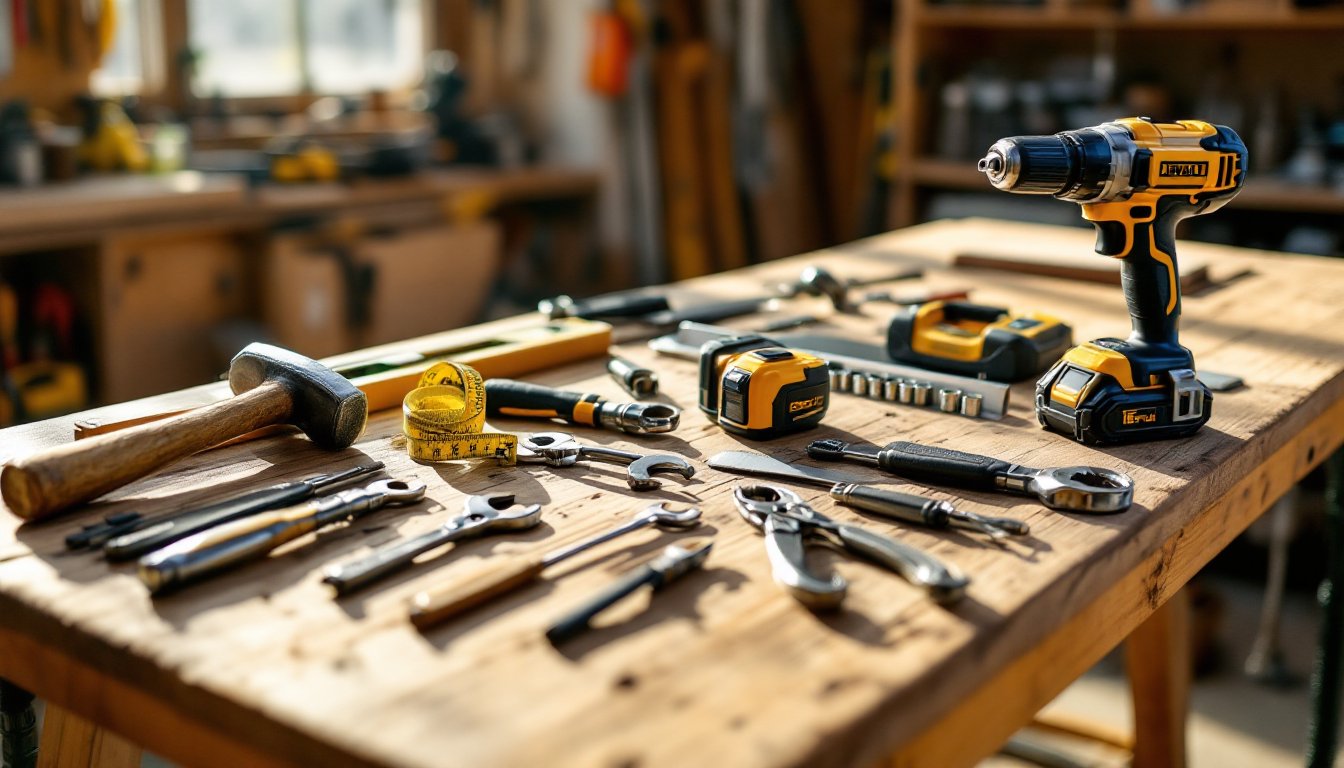
Hand tools are the foundation of any workshop. Whether you’re hanging shelves, fixing a fence, or tackling a full kitchen renovation, understanding what hand tools are and how to use them separates the frustrated DIYer from the confident one. Unlike power tools, hand tools rely on human effort, but they’re quieter, safer, and often more precise for detail work. This guide covers what hand tools are, which ones belong in every homeowner’s collection, and how to choose quality tools that’ll outlast your first project.
Table of Contents
ToggleKey Takeaways
- Hand tools provide precision, control, and tactile feedback—essential advantages over power tools for detail work, repairs, and confined spaces.
- Every functional workshop needs only a dozen versatile hand tools: a quality hammer, multi-bit screwdriver, adjustable wrench, saw, utility knife, chisel, file, and level to handle 80% of household maintenance.
- Mid-range hand tools from reputable brands like Stanley and Bahco outperform cheap alternatives in durability and performance, saving frustration and replacement costs over time.
- Keeping hand tools sharp, clean, and properly stored—using honing stones for blades, wiping after use, and organizing with pegboards or labeled drawers—extends their lifespan for generations.
- Start with essential hand tools and add specialized equipment as projects demand them, building your collection naturally while keeping costs manageable and ensuring every tool sees regular use.
Understanding Hand Tools and Their Purpose
Hand tools are manually operated implements designed to perform specific tasks without electricity or gas. They range from simple tools like hammers and screwdrivers to more specialized equipment like chisels, levels, and adjustable wrenches. The primary advantage of hand tools is their precision and control, you’re directly influencing the work, which means fewer mistakes and safer operation in confined spaces.
Unlike power tools that rely on motors and batteries, hand tools give you tactile feedback. When you’re driving a screw with a manual screwdriver, you feel when it’s seated properly. When you’re sawing, you control the pressure and angle. This direct feedback makes hand tools ideal for finish work, delicate repairs, and situations where noise matters.
Hand tools also come with minimal setup and maintenance. No charging batteries, no blade changes mid-project, and no safety guards to adjust. You pick up a hammer, drive the nail, and move on. For homeowners who work on projects intermittently, hand tools often make more practical sense than investing in expensive power equipment that sits idle for months.
Essential Hand Tools Every Homeowner Should Own
Every functional workshop starts with a core set of tools. You don’t need a collection that fills a garage, focus on versatile items that handle the most common household repairs and projects. Most homeowners can tackle 80% of routine maintenance with just a dozen tools in reach.
When assembling a basic set, prioritize tools that overlap functionality. A quality hammer works for driving nails and small demolition. A multi-bit screwdriver (or a set of individual bits) handles countless fastening tasks. A adjustable wrench adapts to different bolt and nut sizes. These versatile tools mean you’re not buying a different carry out for every job.
Striking and Fastening Tools
Striking and fastening tools form the backbone of most projects. The 16-ounce claw hammer is the workhorse, heavy enough to drive nails efficiently but light enough for all-day use. The claw end removes bent nails without mangling the surface. For finish work, consider a 20-ounce framing hammer or a rubber mallet for striking chisels and adjusting components without marring surfaces.
Screwdrivers come in two main categories: Phillips head (the X-shaped recess) and slotted head (the straight-line recess). A multi-bit screwdriver with interchangeable bits saves space, though dedicated drivers offer better feel and control. Square-drive screws (found in many Canadian-market tools) need a dedicated bit. Hand tool quality matters here, a cheap screwdriver can strip screw heads and cause frustration. Brands like Wiha and Wera hold up better under repeated use than bargain-bin alternatives.
Adjustable wrenches (often called crescent wrenches) handle bolts and nuts in different sizes. A single 8-inch adjustable wrench covers most household plumbing and hardware work. For more variety, a small set with 6-inch, 8-inch, and 10-inch sizes covers nearly everything. Keep the jaws clean and tight, a loose wrench slips and rounds bolt edges.
Cutting and Shaping Tools
Cutting tools define the boundary between rough work and finished projects. A pull saw (often called a Japanese saw) cuts faster and cleaner than a western-style push saw for many applications. Pull saws cost less, require less physical effort, and produce less tearout on finish surfaces. For crosscutting lumber, a 20-inch handsaw works but requires sharp teeth and proper technique.
For small cuts and detail work, a utility knife with replaceable blades is essential. Keep blades sharp, dull blades slip and require dangerous pressure to cut. A sharp blade does the work: a dull one invites injury. Store blades safely and replace them frequently: they’re inexpensive and safety trumps saving a blade.
Chisels shape wood, clean corners, and cut mortises. A 1-inch bevel-edge chisel handles most carpentry tasks. Bevel-edge chisels fit into tight corners better than mortise chisels (which have thicker blades). Quality matters, cheap chisels dull quickly and don’t hold a fine edge. A stropping block or honing stone keeps chisels performing.
A hand plane smooths surfaces and removes thin shavings for perfect fit. A number 4 or number 5 bench plane works for most homeowner tasks. Even old planes from antique shops, when tuned up, outperform modern budget alternatives. Hand planes feel intimidating at first but produce satisfaction no power sander matches.
A quality utility file removes burrs, smooths edges, and shapes metal or wood. A 8-inch flat file and a round file cover most work. Files cut in one direction (the “cut”), pushing the tool does the work, while pulling back doesn’t. Keep files dry: rust and dull edges make them useless.
How to Choose Quality Hand Tools for Your Projects
The cheapest tool isn’t the best buy when you factor in frustration and repeated replacement. Budget tools often have loose handles, dull blades, and poor balance. A mid-range tool, not premium brands, but not the bargain-bin option either, serves homeowners well.
Look for solid steel, not plastic-heavy construction. Feel the weight and balance in your hand. A hammer should feel stable, not nose-heavy. A screwdriver should have a comfortable grip and solid shaft without flex. Test the action if possible, does the adjustable wrench tighten smoothly? Does the sliding fence on a square lock securely?
Brand reputation matters. Brands like Stanley, Bahco, Klein Tools, and Irwin have earned trust through decades of consistent quality. That doesn’t mean you need top-tier brands for every tool, a basic level from a reputable manufacturer outperforms a premium no-name brand. Toolbox Tools: Essential Gear breaks down how to organize and select tools for your needs.
Consider the warranty and availability of replacement parts. Some budget tools have parts you can’t source five years later. A hammer head wears out and you need a replacement: tools from reputable manufacturers keep parts available. A screwdriver tip breaks: you should be able to buy a replacement bit. Tool Kit for Home covers organizing a home workshop for maximum access.
Start with essential tools and add specialized ones as projects demand them. A beginner doesn’t need every size of wrench or drill bit, buy them as needed and your collection grows naturally. This approach keeps costs down and ensures every tool sees regular use. Building a tool collection is a process, not an overnight investment.
Maintaining and Storing Your Hand Tools
Hand tools last generations when maintained properly. Clean tools after use, sawdust and dirt accelerate wear and corrosion. A quick wipe with a dry cloth prevents moisture from settling on metal surfaces. Store tools in a dry location. A toolbox protects them from dust and keeps them organized.
Keep edges sharp. A dull blade requires dangerous pressure to cut and produces poor results. Hone chisels and plane irons regularly on a whetstone or stropping block. Files need occasional cleaning with a file card to remove packed debris. A sharp tool is a safe tool, it does the work instead of slipping.
Check handles for cracks or splits, especially on wooden handles. A loose hammer head is dangerous. Tighten loose hardware regularly. Replace grips on screwdrivers if they become damaged or slippery.
Organize tools so you know what you have and where it is. A wall-mounted pegboard shows your collection at a glance and keeps frequently used tools accessible. Drawers with dividers prevent tools from jumbling together and damaging edges. Label drawers or use outlines to show where each tool belongs. When everything has a place, you grab what you need without searching.
Protect precision tools. Store levels on their sides (never with the bubble vial pressed against anything). Keep measuring tapes in their cases. Hang saws vertically to protect teeth. These small habits preserve accuracy and extend tool life. Construction Hand Tools: Boost offers specialized care for professional-grade hand tools that also applies to quality homeowner equipment.
Conclusion
Hand tools form the foundation of a functional workshop. Start with essentials, a hammer, screwdrivers, adjustable wrench, and basic saws, then expand as your projects demand specialized equipment. Choose mid-range quality over bargain prices, maintain your tools properly, and they’ll serve you reliably for years. A well-maintained hand tool collection simplifies projects, builds confidence, and makes DIY work genuinely enjoyable rather than frustrating. Your future self will thank you for investing in tools that actually work.